


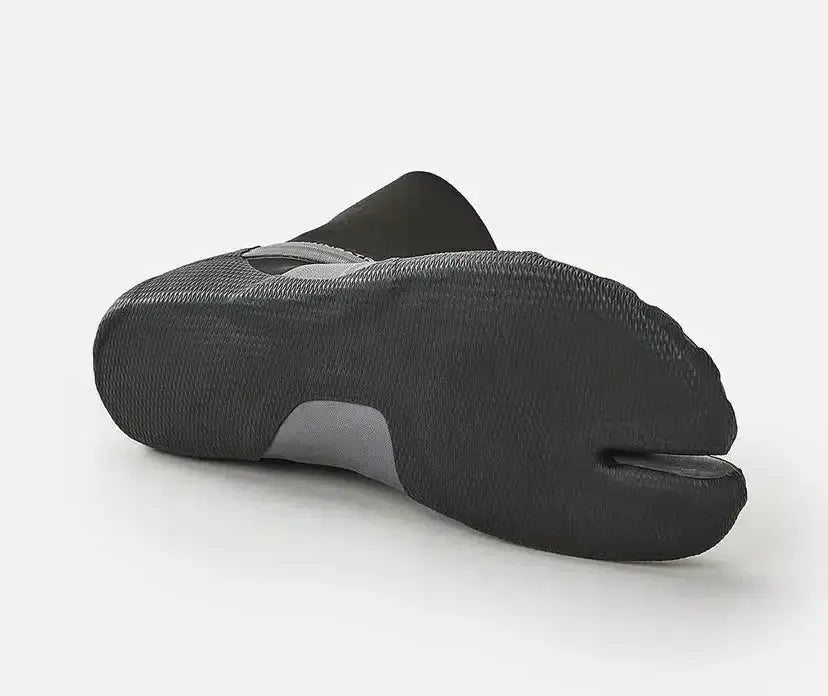
If you're new to surfing and looking for split toe booties, you're making the right choice! These models offer more stability and control on the board, while keeping your feet warm. But which model should you choose when you're a beginner? What thickness should you prioritize? 🤔
Here is our complete guide to finding the best split toe booties for beginners, with a selection of models adapted to your progression!
✅ Why choose split toe booties when you're starting out?
Split toe booties separate the big toe from the others, which offers several advantages for learning surfers:
✔ Better balance on the board → More stability and control.
✔ Enhanced grip → Less slipping on the wax and tail pad.
✔ More natural feel → Close to bare feet, promotes precise foot placement.
💡 Ideal for learning how to position your feet properly and improve your technique from the very first sessions!
🌡 What thickness should you choose?
The thickness of the booties depends on the water temperature:
| Water Temperature | Recommended Thickness |
|---|---|
| 12 - 17°C | 3 mm → Light and flexible, perfect for beginners 🏖 |
| 8 - 12°C | 5 mm → Good balance between warmth and flexibility ❄ |
| < 8°C | 7 mm → Maximum protection against the cold 🌊 |
💡 For a beginner, 3 mm booties are often sufficient, unless you're surfing in very cold water.
🎯 The best split toe models for beginners
Here is a selection of high-performance, comfortable, and accessible booties, perfect for starting out surfing with split toes!
🔹 RIP Curl Dawn Patrol Split Toe (3mm) – Best value for money 💰
✔ Affordable price (~70€), perfect for starting without investing too much.
✔ E3 Freeflex Neoprene → More flexibility and comfort.
✔ Thin sole (0.8 mm) → Excellent board feel.
✔ 3 mm thickness → Warm enough without being stiff.
👉 Ideal for: beginners who want good booties at an affordable price!
🛠 How to choose your surf booties?
📌 1. Opt for a thin sole
The thinner the sole, the more feel you'll have on the board, which is essential for rapid progress.
✅ Beginners → Choose a flexible sole to learn how to place your feet properly.
📌 2. Get a snug size
Surf booties should be snug to prevent water from getting in.
🔹 Choose a size slightly smaller than your usual shoe size.
🔹 They should be tight when dry, as neoprene softens when wet.
💡 Booties that are too big = cold feet and a floating sensation.
📌 3. Check the quality of the seams
Good surf booties should be waterproof and durable.
✅ Glued and blindstitched (GBS) seams → Limits water infiltration.
✅ Soft inner lining → More comfort and quick drying.
🔥 Our verdict: which booties to choose when starting out?
✔ Best value for money → Rip Curl Dawn Patrol 3mm.
👉 Ready to get geared up? Discover the best surf booties on Shapers Club and enjoy your winter sessions without cold feet! ❄🏄♂️

Share:
Split toe vs round toe: what type of booties to choose for winter surfing? 🏄♂️🦶
Surfer's ear and surfing: how to protect your ears from cold and infections? 🌊👂❄️