

We're diving into the technical aspects that transform a good surf session into an extraordinary experience. After discussing the importance of fins and their influence on surf performance, let's now look at the specific details that make up a fin: the terms describing their shape, the materials used, and the different fastening systems.

Understanding the Shape of a Fin
- Base: The part of the fin that is attached to the board. A wide base offers more drive (propulsive force), while a narrow base increases maneuverability.
- Height (or Depth): The distance between the bottom of the board and the highest point of the fin. Greater height improves stability and control, ideal for larger waves.
- Rake (or Sweep): The angle of the fin relative to its base. A high rake increases maneuverability and is good for long, flowing turns, while a low rake offers more control and is preferable for quick, tight turns.
- Foil: The cross-sectional contour of the fin, which affects how water flows over its sides. A symmetrical foil (identical on both sides) is common, but asymmetrical variations can change the force distribution and responsiveness of the fin.
- Flex: The fin's ability to bend under pressure and return to its original shape. The more flexible the fin, the more responsive it is and the more energy it can release during turns.
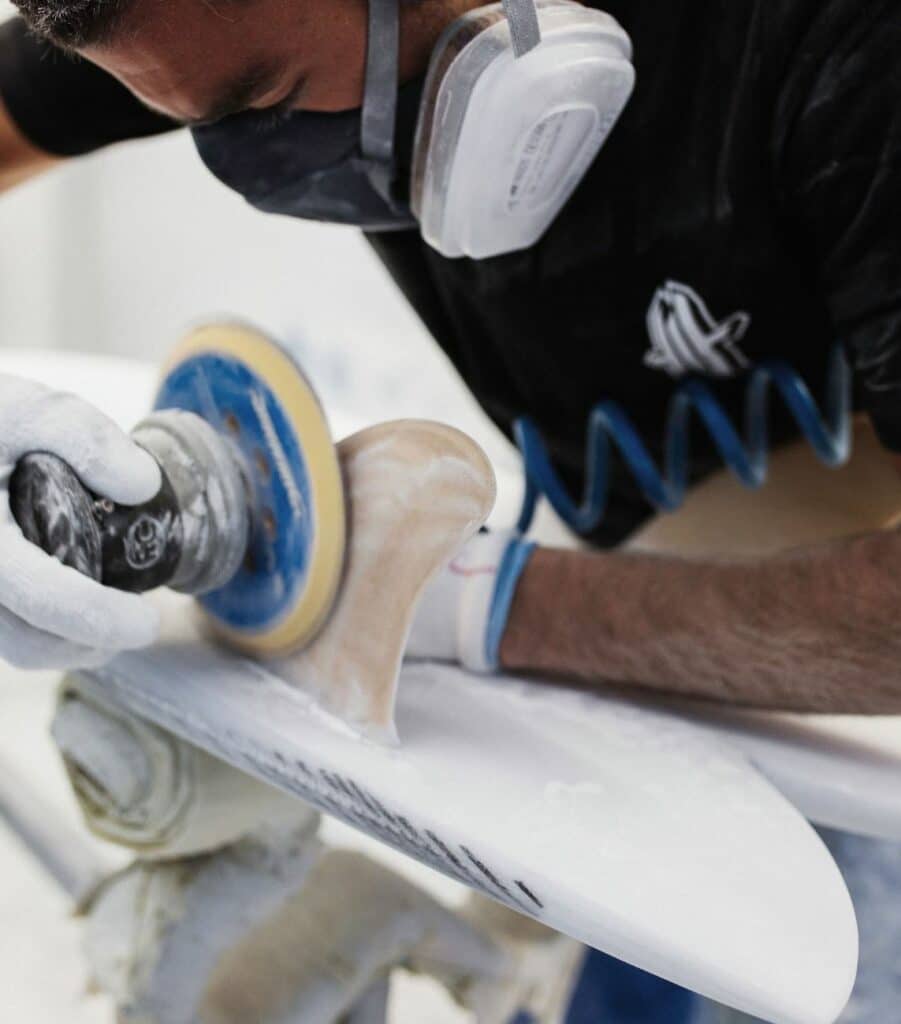
Fin Materials: Advantages and Disadvantages
-
Fiberglass:
- Advantages: Very durable, offers excellent control and a stiff response.
- Disadvantages: Can be heavy and less responsive than other materials.
-
Plastic or Nylon:
- Advantages: Economical and shock-resistant.
- Disadvantages: Less effective in terms of performance due to its flexibility and poor shape memory.
-
Carbon:
- Advantages: Extremely lightweight and responsive, offers excellent flex and energy return.
- Disadvantages: More expensive and can be less durable in the event of a strong impact.
-
Material Combinations:
- Advantages: Manufacturers often use combinations, such as fiberglass and carbon, to optimize lightness and resilience.
- Disadvantages: Cost can be higher due to manufacturing complexity.

Fin Fastening Systems
- FCS (Fin Control System): The most common and versatile, offers two slots for screwing in the fins, allowing for quick and easy adjustments.
- Futures: Uses a unique longitudinal rail for a solid attachment, which reduces flex at the base and improves the connection between the fin and the board.
- US Box: Primarily used for longboards, this system allows for significant adjustment of the fin along a groove, offering configuration variability.
- Glass-On: Fins directly glued to the board, with no possibility of removal or adjustment. Provides a solid and durable connection.
Conclusion
Choosing the right fins involves understanding the subtleties of their design, the materials used, and the appropriate fastening system. Every aspect of the fin, from its shape to its material, directly affects your board's performance and, by extension, your ability to surf with confidence and style. Whether you're a fierce competitor or an occasional surfer, taking the time to select the fins that best suit your needs will allow you to fully enjoy every wave.

Share:
PART 1/ Master the Waves: How to Choose Your Surfboard Fins?
Heading to Paris 2024: Everything You Need to Know About Olympic Surfing Qualification